






DCMS combines the Diadès Marine HORIZON 200 Patrol radar with multiple sensors in a mission system dedicated to unmanned surface vessels. By bringing surveillance information together into a common tactical picture, this approach helps operators detect, assess and track contacts of interest. From maritime surveillance and infrastructure protection to operational support, integration starts with your mission, your platform constraints and the information needed to support decisions.
Why choose DCMS for USV ?
Because effective maritime surveillance starts with reliable detection. Radar is the cornerstone of our surveillance architecture: the primary sensor that provides the first detection and enables other sensors to investigate. DCMS brings radar engineering experience and signal-processing expertise into the complete mission system.
Adding more navigation radars does not, by itself, deliver the capabilities of a purpose-built surveillance radar. Our H200 Patrol uses chirped-magnetron technology to detect small, weakly reflecting targets at long range while supporting safe navigation, including in challenging weather and sea conditions. The HORIZON 200 family combines magnetron power, pulse compression and Doppler processing to improve small-target detection and suppress sea and rain clutter.
See more : Diadès Marine product information
What other sensors does DCMS integrate?
Alongside radar, DCMS integrates navigation and surveillance cameras, including visible-light and thermal imaging, Automatic Identification System (AIS) data and radio-frequency sensors, according to mission requirements.
These complementary inputs help operators move from initial detection to identification and assessment, building a coherent maritime picture. DCMS combines sensor fusion, image processing and automation to support operators and reduce their workload. The system also incorporates redundant communications to maintain connectivity if a link becomes unavailable.
The sensor suite can evolve with the mission. For example, the BlueWatch demonstration brings together radar, electro-optical and infrared sensing, and passive acoustics for offshore surveillance and critical infrastructure protection.
See more : Diadès Marine’s public updates
Who is the solution designed for, and what missions does it support?
DCMS is designed for coast guards, naval forces, government agencies and private operators responsible for maritime security and the protection of sensitive assets.
Potential missions include coastal and Exclusive Economic Zone (EEZ) surveillance, maritime border monitoring, support to fisheries enforcement, detection of suspicious vessel activity, and search and rescue. For naval users, applications include harbour protection, ship escort and maritime situational awareness.
Private operators can use the solution to monitor the waters around ports, offshore energy installations and other critical infrastructure. The mission system and sensor package are tailored to the area, the targets of interest and the response required.
Who can integrate the solution, and on which platforms?
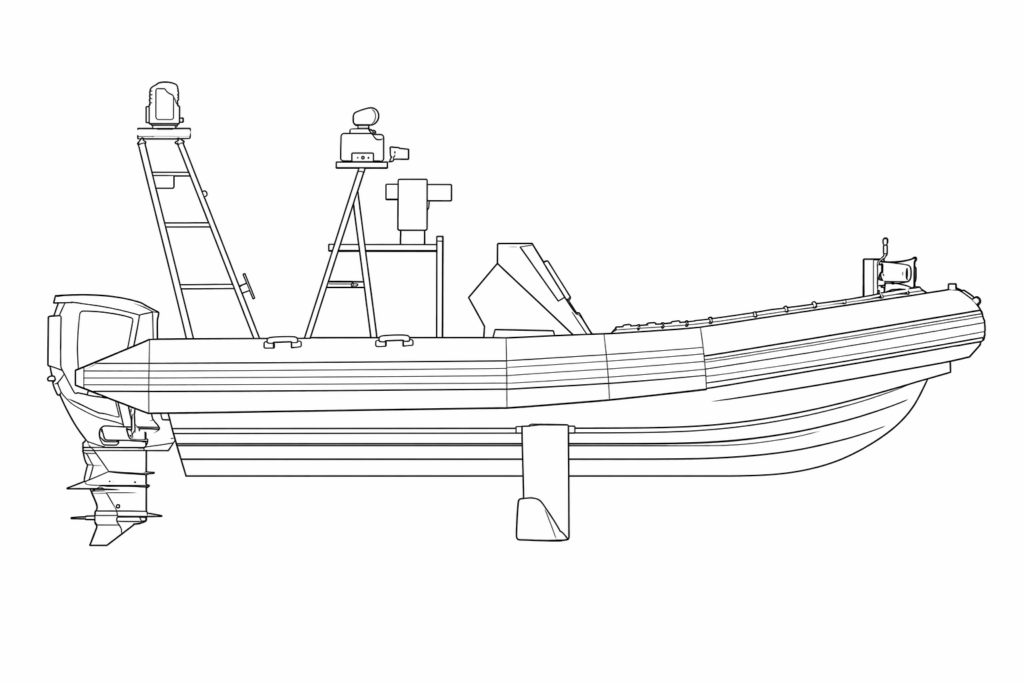
DCMS works with USV manufacturers, shipbuilders and system integrators to deploy SEASARS on a wide range of autonomous, remotely operated and compact maritime platforms.
SEASARS is designed as an Edge-native mission system, processing sensor data directly onboard the platform. Its computing architecture can integrate GPU acceleration to support multi-sensor processing, data fusion and AI-based functions close to the sensors, while limiting the amount of data that needs to be transmitted to the remote control centre.
Its modular and open architecture allows radar, EO/IR, AIS, navigation, environmental and other mission sensors to be integrated according to platform constraints and operational requirements. The solution can therefore evolve from a compact USV or instrumented buoy configuration to more complex distributed surveillance architectures.
Is the DCMS solution ready for operational deployment?
DCMS contributes to several French and European innovation programmes focused on autonomous and remotely operated maritime systems.
These projects bring together industrial partners, technology providers and institutional stakeholders to develop and evaluate advanced capabilities in radar surveillance, multi-sensor data fusion, artificial intelligence and mission-system integration.
Through these programmes, DCMS supports the development of new operational concepts for autonomous maritime surveillance, critical infrastructure protection, harbour security, vessel escort and other demanding maritime security missions.
Additional information
Interested in this product?
Download the datasheet or request a demo.
-
90 rue Ernest Hemingway