







SEASARS is a modular Command, Control and Mission System developed by DCMS for maritime surveillance, coastal security and Intelligence, Surveillance and Reconnaissance missions.
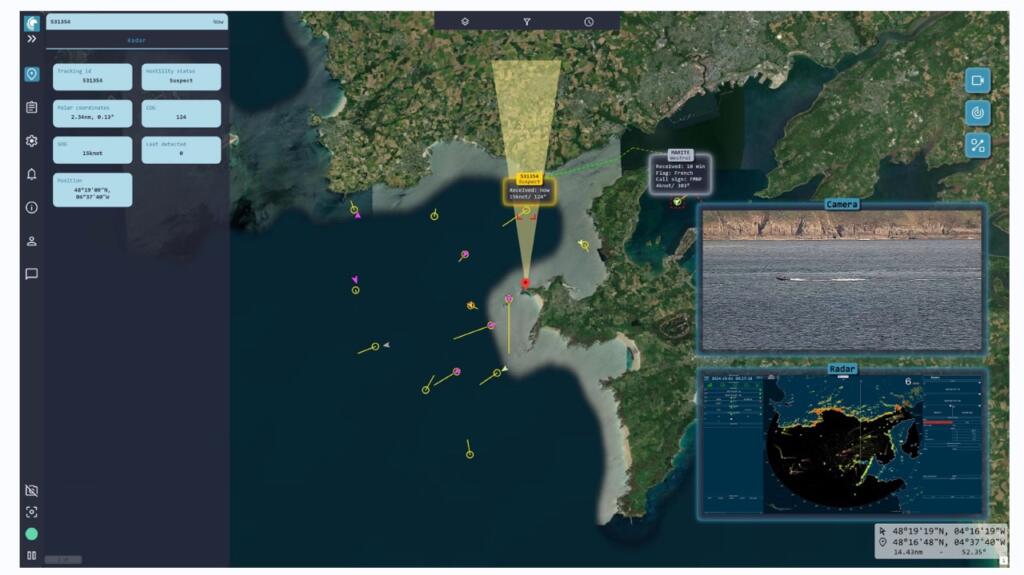
Designed around a radar-first architecture, SEASARS consolidates detections and information from radar, AIS, electro-optical cameras, ADS-B, radio direction-finding systems, acoustic sensors and other mission equipment into a single operational picture.
Deployable on coastal sites, command centres, patrol vessels, Uncrewed Surface Vehicles, UAVs and instrumented buoys, SEASARS provides operators with the tools required to detect, track, identify and understand maritime activity in real time.
What is SEASARS designed for?
SEASARS is designed to support maritime organisations that need to detect, monitor and understand activity across coastal, port and offshore environments.
It can be used by:
- Navies
- Coast guards
- Maritime law enforcement
- Customs authorities
- Border control agencies
- Port authorities
- Search and Rescue organisations
- Fisheries authorities
- Offshore operators
- Autonomous maritime system operators
SEASARS can operate as a standalone mission system for one platform or as part of a wider distributed surveillance network connecting several radar and sensor sites.
Which sensors can be connected to SEASARS?
SEASARS is designed to integrate both cooperative identification data and independent sensor detections, providing operators with a more complete understanding of the operational environment.
Typical connected systems may include:
- Maritime surveillance radars
- AIS receivers and base stations
- Electro-optical and infrared cameras
- ADS-B receivers
- Radio direction-finding systems
- VHF communication systems
- Acoustic and underwater detection sensors
- Weather stations
- Remote Identification receivers
- Navigation sensors
- Platform position and attitude sensors
- External databases and operational information systems
SEASARS can receive radar video, plots and tracks through standard or manufacturer-specific interfaces.
Its modular integration architecture also allows new sensors and data sources to be added as operational requirements evolve.
How does SEASARS improve target identification?
No individual sensor provides a complete description of the maritime situation.
SEASARS improves target identification by presenting and correlating information from several complementary sources.
For example, the system can:
- Compare a radar track with nearby AIS reports
- Associate a camera with a selected radar track
- Automatically point a compatible electro-optical camera towards a target
- Display vessel identity and navigation information
- Record target behaviour over time
- Highlight abnormal or suspicious movement
- Combine observations from several radar stations
Maintain track continuity between overlapping surveillance areas
Can SEASARS be deployed on autonomous or remote platforms?
Yes. SEASARS is designed for both conventional and uncrewed platforms.
It can be deployed on:
- Uncrewed Surface Vehicles
- Aircraft and UAV
- Autonomous boats
- Instrumented buoys
- Patrol vessels
- Fast boats
- Offshore platforms
- Coastal surveillance stations
- Mobile surveillance units
- Remote command centres
On an autonomous or remotely operated platform, SEASARS can collect radar and sensor information locally, manage the available communication bandwidth and transmit the relevant operational picture to a remote control station.
Is SEASARS limited to Diadès Marine radars?
No. SEASARS is optimised for integration with Diadès Marine radar systems, but its architecture is not restricted to a single radar manufacturer.
The system can integrate radar video, plots and tracks from different radar technologies, provided that suitable interfaces and technical documentation are available.
This manufacturer-independent approach allows SEASARS to:
- Integrate into existing surveillance infrastructures
- Modernise legacy radar installations
- Combine several radar models in the same system
- Support phased equipment replacement
- Avoid dependence on a single sensor supplier
- Connect mobile and fixed surveillance assets
- Consolidate information from several organisations
Integration feasibility depends on the interfaces made available by the sensor manufacturer and must therefore be assessed for each equipment configuration.
Additional information
Interested in this product?
Download the datasheet or request a demo.
-
90 rue Ernest Hemingway